Joy on a Budget: Inside the $5 Treat Economy Gen Z Swears By
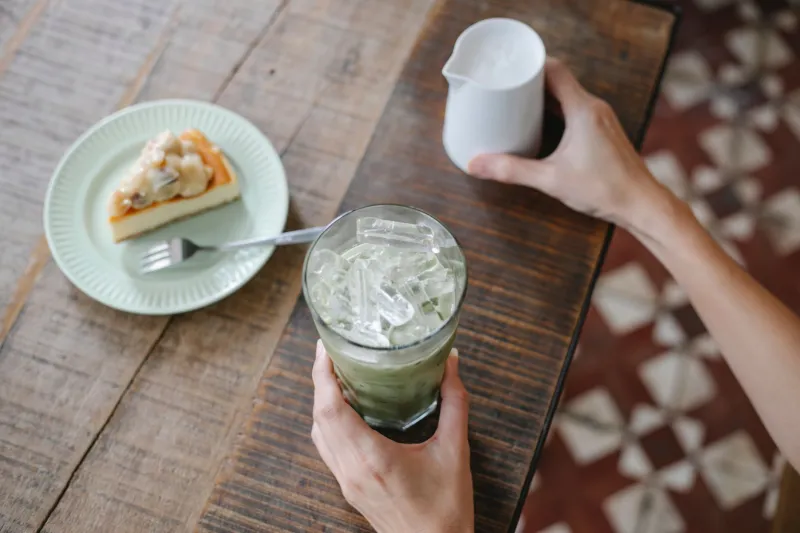
There's a ritual playing out in every American city right now. It's 2 p.m. on a Wednesday, you've answered forty emails, your rent went up 8%, and the only thing standing between you and a full meltdown is a $6 iced matcha with oat milk. You don't even love matcha that much. You love what it represents: proof that you can still choose something nice for yourself, even if the choice only costs five bucks.
Welcome to the $5 treat economy — the unofficial financial philosophy of a generation that's been told to skip avocado toast for a decade and still can't afford a starter home.
What Exactly Is a Micro-Treat?
The rules are simple. A treat has to be under $10, ideally under $7. It has to be immediate — no shipping wait, no planning. And it has to feel mildly indulgent, like something your budgeting app would side-eye. Think: a bakery croissant on your walk to work, a lip gloss from the drugstore, one (1) overpriced candle from TJ Maxx, a solo movie matinee with a slushie.
It's not a purchase. It's a pressure valve.
And it's everywhere. Scroll TikTok and you'll find creators building entire content identities around "treat culture," documenting their daily micro-splurges like field researchers. The comments sections read like support groups and celebrations at once: "the treat is earned," "this is cheaper than therapy," "we're surviving the only way we can."
The Psychology of the Tiny Splurge
Dr. Elaine Okafor, a consumer psychologist who studies spending behavior in young adults, says the math of the micro-treat is less about money and more about control. "When big goals feel unreachable — homeownership, financial stability, even a vacation — people redirect their need for reward into small, achievable wins," she explains. "A $6 treat delivers a genuine dopamine hit. The problem is the hit is short-lived, which creates a loop."
That loop is what critics latch onto. Finance creators have turned "treat culture" into a battleground. Some, like budgeting TikToker Marcus Delgado, defend it fiercely: "If you're contributing to your savings and paying your bills, a $5 daily joy is not why you can't afford a house. Rent is why you can't afford a house. The treat is the least of your problems."
Others aren't so sure. "Micro-splurging is anesthesia, not medicine," argues one financial literacy creator with half a million followers. "Five dollars a day is $1,800 a year. That's an emergency fund. That's a flight to somewhere. You're trading your future for a matcha."
Both camps have a point, which is probably why the discourse never dies. The treat isn't really the issue. The treat is just where the argument about generational economics goes to live.
Treat or Symptom?
Here's the uncomfortable context: Gen Z is the first generation in decades projected to be worse off than their parents. Median home prices have roughly doubled in a decade. Entry-level salaries haven't kept pace with rent in most US metros. A down payment feels like a mythological object, like a unicorn or a landlord who fixes things quickly.
When the big milestones are locked behind a paywall, small luxuries stop being frivolous and start being functional. They're the only rewards with a realistic price tag.
So is the $5 treat self-care? Honestly, it's both. It's a legitimate, affordable way to practice joy in a brutal economy — and it's also a symptom of a system that's made joy expensive and stability unreachable. The treat isn't the problem. But we should be honest that we're treating something.
The Joy-Per-Dollar Rankings
Since we're already here, we might as well be scientific about it. Using a completely unrigorous but emotionally accurate methodology — duration of happiness, anticipation factor, and hangover potential (financial or otherwise) — here are the top micro-treats, ranked by joy per dollar.
1. The Bakery Pastry ($4–6) — Peak efficiency. You get anticipation on the walk there, warmth in your hands, and fifteen minutes of pure, uncomplicated bliss. No guilt, no clutter, no subscription to cancel.
2. The Fancy Coffee or Matcha ($5–7) — The classic. Slightly docked for being so routine it can fade into background noise, but the ritual value is unmatched. Ordering it with a modification you actually want (yes, the oat milk, yes, the extra shot) is a tiny act of self-advocacy.
3. The Drugstore Beauty Item ($6–10) — A new lip liner or a glittery lip oil delivers the thrill of a haul at a fraction of the damage. Bonus joy every time you use it for the next month. Highest joy-per-use ratio on the list.
4. The Solo Movie Matinee ($8–12, sneaking over budget) — Two hours of forced phone-free presence in a cold, dark room with popcorn. Technically a splurge, spiritually a spa day. Worth going over budget occasionally.
5. The Bodega Flower Run ($5–8) — A small bouquet on your kitchen table upgrades your whole week. Flowers are the dark horse of treat culture: cheap, photogenic, and they make your apartment feel like a person with their life together lives there.
6. The Vinyl Single or Used Book ($8–10) — Slower-burn joy. Less instant hit, more lasting glow. Ideal for the treat maximalist who wants their $8 to keep paying dividends.
Spend the $5. Then Ask for More.
Here's the take we'll stand on: enjoy the treat. Buy the matcha. Smell the candles. But don't let treat culture trick you into thinking micro-splurges are a substitute for the bigger things you deserve — fair wages, affordable housing, healthcare that doesn't come with a deductible panic attack.
The $5 treat is a bandage, and bandages are fine. Just don't mistake one for a cure. Vote, organize, ask for the raise, and yes — get the pastry on the way home.
You've earned it. That's kind of the whole point.