Soft Block, Hard Feelings: The Gen Z Purge Reshaping Who We Let Into Our Digital Lives

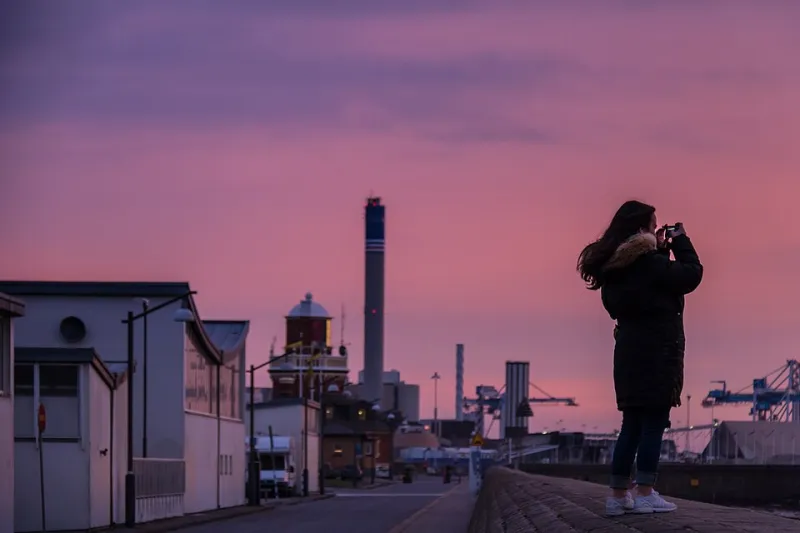
Photo: Basile Morin, CC BY-SA 4.0, via Wikimedia Commons
Somewhere between your third scroll of the day and a random Tuesday afternoon, you've probably done it. You landed on someone's profile — maybe an old classmate, maybe a cousin you see twice a year, maybe that person from your freshman dorm — and you thought: why am I still following this person? And then, quietly, you weren't.
No drama. No announcement. Just gone.
This is the new social media move that nobody's really talking about out loud, but everyone's doing in private. Gen Z is in the middle of a mass digital declutter — and it goes way deeper than muting someone's Stories.
From FOMO to 'I Don't Actually Care'
For most of the 2010s, social media operated on a simple, unspoken rule: more connections meant more social capital. You collected followers and friends like trading cards. Unfollowing someone was practically a declaration of war. The anxiety of who unfollowed me? apps was real, and the fear of missing out kept people tethered to feeds that made them feel worse, not better.
But something shifted. Maybe it was the pandemic forcing everyone to figure out who they actually wanted in their lives versus who was just there. Maybe it was years of doomscrolling finally catching up. Whatever the tipping point, a growing number of young Americans have stopped treating their follower count like a personality trait.
Jayla, 24, a marketing coordinator in Atlanta, described the moment she started her purge as almost anticlimactic. "I was on Instagram one night and I realized I had, like, 900 followers and I genuinely did not know who half of these people were. I didn't care what they were doing. Why was I giving them access to my life?" Over three weeks, she trimmed her following list from 847 to just under 200. She says her feed now feels like "walking into a room full of people you actually want to talk to."
That feeling — of reclaiming your own digital space — is exactly what's driving the trend.
The New Rules of the Cut
What's fascinating about this wave of unfollowing is how intentional it is. This isn't rage-unfollowing someone after a fight. People are developing actual criteria, almost like a personal policy, for who makes the cut.
Tyler, 21, a college junior in Chicago, has a simple test: "If I saw this person in real life tomorrow, would it be weird or would it be normal? If it would be weird, they're off the list. I don't need that energy in my phone."
Others are more philosophical about it. Destiny, 26, from Houston, says she asks herself whether someone's presence on her feed adds anything real. "I'm not looking for everyone to inspire me or whatever. But if seeing their posts makes me feel bad about myself, or if I genuinely feel nothing, that's information. That tells me something about why they're there."
The criteria people are using — does this person make me feel seen, do I actually care about their life, would this connection exist without social media — reflect a broader cultural shift toward authenticity over accumulation. It's the digital equivalent of cleaning out your closet and realizing you've been holding onto things out of guilt, not love.
Mental Health Is the Whole Conversation
It would be impossible to talk about this without talking about mental health. The link between heavy social media use and anxiety, depression, and low self-esteem has been documented enough times that it's basically common knowledge now. What's changed is that young people are actually acting on it — not by deleting the apps entirely, but by redesigning how they use them.
Dr. Rachel Simmons, a wellbeing educator who works with young adults, has noted this shift in her own work. "What I'm seeing is a generation that understands, on a gut level, that their attention is valuable. They're starting to treat their social media feeds the way they'd treat their physical environment. You wouldn't invite 800 people into your apartment. So why are you letting 800 people into your mental space?"
The unfollowing trend is, in many ways, an act of self-preservation dressed up as a social media habit. It's boundary-setting without a conversation. It's choosing yourself without making it a whole thing.
But It's Not Always Clean
Here's where it gets complicated. Unfriending someone you've known in real life — a former best friend, a high school teammate, a coworker from two jobs ago — carries weight that unfollowing a celebrity or a brand does not. People notice. Feelings get hurt. Awkward text messages get sent.
Marcus, 23, from Brooklyn, found out a close friend had removed him from Instagram through a mutual. "It stung, honestly. We weren't super tight anymore, but I thought we were still cool. It made me wonder what I'd done or what they thought of me." He pauses. "I get it, though. I've done it to people too."
There's a real tension here between the individual's right to curate their own experience and the social contract that comes with years of shared history. Unfollowing isn't inherently cruel, but it isn't always painless either. The move that feels like self-care on one end can land as rejection on the other.
The healthiest version of this trend, maybe, is the one where people are honest with themselves about why they're making the cut. Is it because this person genuinely doesn't belong in your digital life anymore? Or is it avoidance dressed up as curation?
What This Says About Us Right Now
The Great Unfollowing is ultimately a story about growing up in public and then deciding, at some point, that you'd like a little more control over who's watching. It's a story about a generation that built its social life online and is now renegotiating the terms.
For Gen Z especially, the digital and the personal have never been separate. Your online circle is your social world, at least in part. Pruning it isn't trivial — it's an act of self-definition. It says: this is who I am now. This is who I want around me. This is the life I'm actually living, not the one I'm performing.
And honestly? That sounds less like a social media trend and more like just growing up.