The Couch Was Never the Plan: Inside Gen Z's Fight for the 6-to-10 Life
There's a moment that happens in apartments across America every weekday around 6:15 p.m. The bag hits the floor. The shoes come off. The body migrates, almost involuntarily, toward the couch — and suddenly it's 11 p.m., the takeout containers are stacked on the coffee table, and the only thing you've accomplished since clocking out is finishing another season of a show you don't even like that much.
For decades, this was just called being tired. Now, a growing number of Gen Z workers are calling it what they think it actually is: a scam. A default setting nobody chose. And they're opting out.
The Great Evening Rebellion
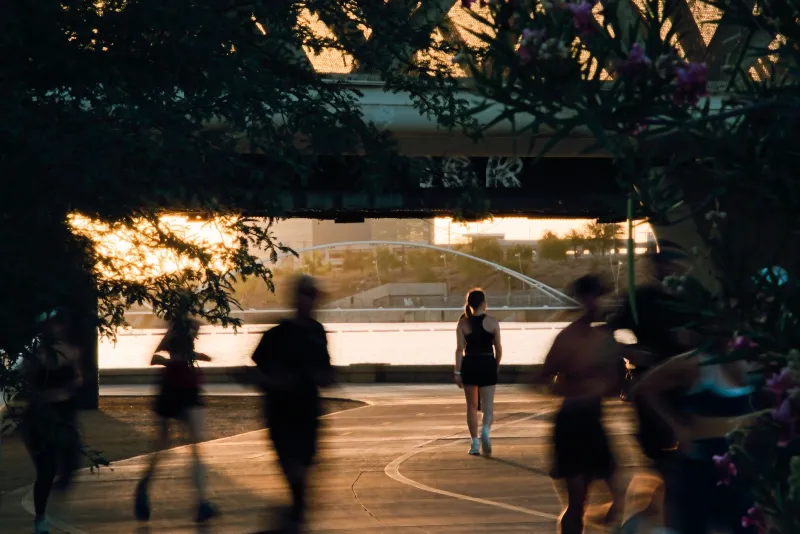
Ask around any big city — New York, Chicago, Atlanta, Austin — and you'll find the evidence. Run clubs that meet at 6:30 sharp and draw hundreds of twenty-somethings. Beginner pottery classes booked out weeks in advance. Supper clubs where strangers cook for each other in borrowed kitchens. The pattern is unmistakable: young workers are treating the hours after work not as decompression time, but as the actual point of the day.
Maya Chen, 26, a junior UX designer in Chicago, put it bluntly over a post-run bagel. "My first year out of college, I'd get home at 6, collapse, scroll for four hours, feel bad about it, go to sleep, repeat. I was living for weekends and wondering why I was miserable by Wednesday."
Her fix wasn't a productivity system or a morning routine. It was a Tuesday night ceramics class she signed up for on a whim — and paid for upfront, so she'd actually go. "The class fee is my accountability," she laughs. "I'm not skipping a $45 wheel session to watch TikTok."
Why the Couch Won for So Long
It's worth being honest about the villain here, because it's not laziness. The post-work slump is structural. Hybrid and remote work blurred the boundaries between job and life, so the brain never fully clocks out. Commutes shrank or vanished — which sounds nice until you realize the commute was a decompression chamber. And the couch is a machine engineered to be frictionless. Nobody has to design a good evening when the bad one requires zero effort.
There's also the burnout factor. A generation raised on hustle culture messaging grew rightfully suspicious of optimizing their downtime. For a while, "rotting" on purpose felt like resistance. But somewhere along the way, plenty of people realized that four hours of algorithmic scrolling wasn't restful — it was just a different kind of numb.
The evening ritual movement isn't hustle culture in disguise. Nobody's monetizing their pottery. It's less about achievement and more about texture — having a night that feels different from the workday that preceded it.
Third Places Are Back, and They're Booked
The sociologist Ray Oldenburg coined the term "third place" back in the '80s — the spots that aren't home and aren't work where community actually happens. Coffee shops, barbershops, bowling alleys, churches, rec leagues. For a long stretch, those spaces atrophied, squeezed out by rising rents and the gravitational pull of home streaming.
Now they're back, and Gen Z is the reason. The difference is that today's third places are often structured. It's not just hanging out at a bar — it's a run club that ends at a bar. It's not just a coffee shop — it's a co-working café that hosts a knitting night. The structure solves the hardest part of adult friendship: the logistics. You don't have to text six people and find a date that works. You just show up, and the same people show up too.
That's how Jordan Reeves, 28, rebuilt his social life after most of his college friends scattered. "I joined a Wednesday volleyball league knowing literally nobody. Three seasons in, those people came to my birthday. You can't replicate that in a group chat."
The Ritual Beats the Plan
Talking to people who've actually built rich evening lives, one theme keeps coming up: it's never about motivation, it's about ritual. The same thing happens every week, at the same time, with the same people, until it stops requiring willpower.
A recurring Tuesday dinner with three friends, rotating who cooks. A standing Thursday run. A monthly gallery night. These aren't events — they're infrastructure. And crucially, they're cheap or free, which matters for a generation renting in cities where a cocktail costs $18.
There's also a quieter, personal layer: the solo rituals. The 6:30 walk around the neighborhood. The half-hour of reading with the phone in another room. The sketchbook at the kitchen table. Not everything needs to be social. The point is that the evening belongs to you — not to your inbox, and not to your feed.
The 9-to-5 Isn't the Whole Story
What ties this all together is a subtle but real shift in how young workers relate to their jobs. Work is the thing that funds the life. It is not the life. And if the only waking hours you control are 6 to 10 p.m., then those hours are precious — maybe the most precious resource you have.
Maya from the ceramics class put a bow on it: "My grandma used to say the day isn't over when work is over, it's over when you say it is. I think we're all just figuring out what our grandma meant."
So tonight, when the slump hits at 6 p.m. — and it will, because it's engineered to — consider it an invitation rather than a verdict. Sign up for the thing. Text the group about the standing dinner. Put on shoes and leave the apartment.
The couch will still be there later. That's kind of the problem.