Tentative, Maybe, We'll See: The RSVP That's Quietly Breaking the Group Chat
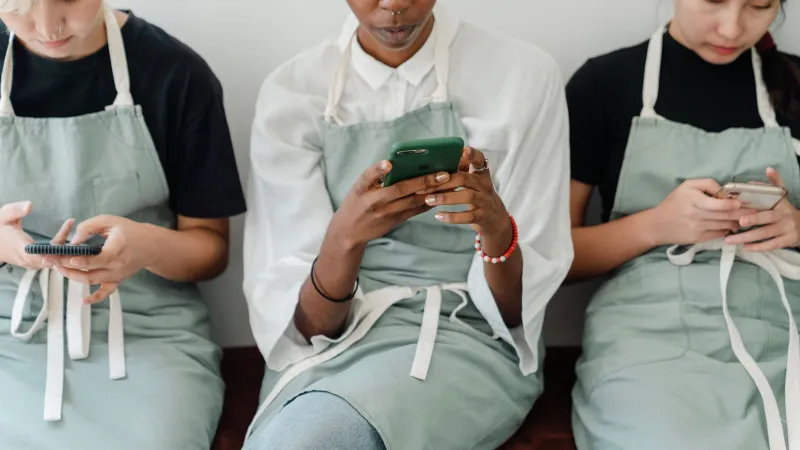
The invite went out on a Tuesday. By Wednesday, the group chat had its verdicts: six yeses, one no, and four responses that read like a weather forecast. 'Might be down, depends on work.' 'Probably!! Will confirm.' 'Let's play it by ear.' The host, a 24-year-old in Chicago, stared at her phone and did the math every party planner now has to do: take the maybe count, divide by two, and hope for the best.
Welcome to the Maybe Era — where 'tentative' isn't a fallback answer, it's the default one.
The Rise of the Soft RSVP
If you've hosted anything in the last two years, you've felt it. Paperless invites come back with a constellation of question marks. Calendly links get ignored in favor of 'circling back later.' Even wedding invitations — historically the most binding RSVP in American social life — now come with follow-up texts from guests asking if it's 'okay to lock in closer to the date.'
Part of this is logistics. Young people are juggling side hustles, shift work, and second jobs in a way that makes a Saturday three weeks out genuinely hard to promise. When your income depends on picking up a bar shift or a freelance gig, saying yes early feels like a financial risk.
But ask enough maybes and a pattern emerges that has nothing to do with scheduling.
Keeping Your Options Open, as a Lifestyle
'I'm not flaky, I'm strategic,' says Maya, 26, a chronic tentative from Austin who asked to use a first name only — fittingly. 'If I commit on Monday and by Friday I'm tired, I either cancel and feel guilty or go and be miserable. If I say maybe, I get to decide on the day, when I actually know my energy level.'
Maya's logic is sound, and honestly, kind of relatable. After years of hustle culture telling them to optimize every hour, a lot of Gen Z treats their calendar the way investors treat a portfolio: nothing fully committed, everything liquid. A 'maybe' is a hedge. It's the social equivalent of keeping your savings in a high-yield account instead of locking into a CD.
There's also the recovery factor. The post-pandemic social recalibration turned every hangout into a calculation: How many people? How loud? How long is the commute? A tentative answer buys time to assess whether the vibe is worth the energy. It's not that this generation doesn't want to show up — it's that they want to show up fully, and they can't guarantee that in advance.
Now Meet the People Holding the Bag
For every maybe, there's a host refreshing their guest list at 6 p.m. on a Friday.
'The worst part isn't the no-shows, it's the not-knowing,' says Dev, 28, who hosts a monthly dinner in Brooklyn. 'I cook for a number. I buy the wine for a number. When half the list is 'we'll see,' I'm either eating leftover pasta alone or scrambling for last-minute chairs.'
There's a quieter cost, too. Friendship researchers have long pointed out that reliability — not intensity — is what builds trust over time. A friend who's always enthusiastic-but-unconfirmed starts to read as someone who's enthusiastic about the option of you. Over months, the maybes compound. People stop inviting you to the things that require a headcount, then the things that require a ticket, then eventually the things at all.
FOMO, meanwhile, hasn't disappeared — it's just changed shape. The maybe crowd isn't missing out on the party; they're missing out on being someone people count on.
Self-Care or Social Erosion?
So which is it: a healthy boundary or a slow-motion unraveling of the social fabric?
The generous read: this generation is simply refusing to perform enthusiasm they don't feel. Boomers and millennials said yes out of obligation and showed up resentful. Gen Z's tentativeness is honesty with a lag. In that framing, a genuine 'maybe' is more respectful than a hollow 'yes' that turns into a same-day cancellation.
The less generous read: commitment is a muscle, and we're all letting it atrophy. Every relationship — romantic, platonic, professional — runs on small promises kept. If 'let's see how I feel' becomes the baseline answer to every invite, we're outsourcing the emotional labor of planning to whoever's willing to absorb the uncertainty. Usually the host. Usually the friend who cares the most.
The truth probably lives somewhere in between. Flexibility is legitimate when life is genuinely unpredictable. It's a problem when it becomes a shield — a way to stay in every conversation while committing to none of them.
A Truce Worth Trying
Maybe the fix isn't going back to hard yes-or-no culture, but building some shared etiquette around the gray zone. A few rules of thumb making the rounds:
- Set a deadline. 'Maybe until Thursday' is a maybe. 'Maybe' forever is a no with extra steps.
- Maybe with a probability. '70% yes' gives hosts something to work with. Vague hope helps no one.
- Never maybe for the small stuff. Coffee for two? Just answer. The stakes don't justify the hedging.
- If you're hosting, plan for the maybe math. You know your friend group. Budget accordingly.
The Maybe Era, like most Gen Z trends, is really a negotiation with a world that taught this generation to expect plans to fall through — jobs, leases, the whole deal. Keeping options open is a rational response to a shaky world.
But here's the thing about showing up when you said you would: it's still one of the cheapest, most underrated ways to tell someone they matter. And no amount of flexibility is worth being the friend nobody can count on.
Confirm by Thursday. Your group chat will thank you.