Log Off, Pull Up: The Unlikely Resurrection of the Hangout Spot
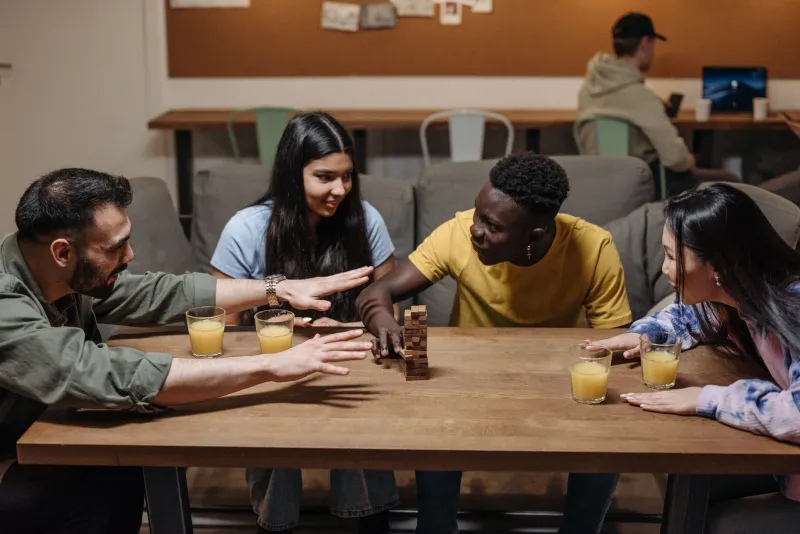
There's a specific sound a board game café makes on a Friday night. Dice hitting wood. Somebody losing it over a terrible hand. A barista calling out a matcha latte for someone named 'Zoe — with a K.' It's noisy, it's kind of chaotic, and if you'd walked past one of these spots in 2019, you'd assume it was dying business. Today? There's a waitlist.
The third place — that old sociology term for the spots that aren't home and aren't work or school — was supposed to be dead. Starbucks killed the lingering. COVID killed the lingering-er. And for a while, the assumption was that Gen Z had simply migrated the whole concept online. Why rent a table when you have a Discord server that never closes?
Something shifted. The group chat is still there, obviously. But it's increasingly the planning layer, not the place itself.
The Great Offline Migration
Ask around and the pattern repeats in city after city. In Chicago, run clubs that started as five friends and a Strava group now shut down half-mile stretches with hundreds of runners in matching merch. In Austin and Atlanta, makerspaces report a membership base that skews shockingly young — twenty-somethings learning ceramics and welding because, as one member put it, 'the pottery wheel doesn't have a notification badge.'
Even the humble mall, declared dead roughly 47 times since 2010, is getting a second act as a hangout — not because of the stores, but because teens and college students have nowhere else to go that doesn't cost $40 an hour.
And that's the twist: this generation isn't just gathering offline. They're paying to do it. A $6 latte to sit for two hours. A $15 drop-in for pickleball. A monthly makerspace fee that costs more than three streaming subscriptions combined. For a cohort famous for budget-hacking, that's not an accident. It's a purchase with a purpose.
What Actually Changed
The easy explanation is the loneliness epidemic — the Surgeon General literally put out an advisory on it, and everyone from college counselors to HR departments has been scrambling since. But talking to the people actually showing up, the story is more interesting than just 'we were sad, so we went outside.'
It's more like: the online version of hanging out ran its course. The Discord server never closes, which sounds great until you realize a room that's always open is a room you never really leave. Voice memos and streams are great, but they don't produce the thing sociologists call 'weak ties' — the barista who knows your order, the guy who's always at the climbing gym on Tuesdays, the rival who's beaten you at Catan four weeks running.
Those low-stakes, repeated, in-person interactions turn out to be load-bearing for a social life. You can't soft-block someone at a run club. You have to figure it out like a person.
There's also a practical layer. Remote and hybrid schedules blurred the line between home and everything else, which made the apartment feel less like a refuge and more like a cubicle with a bed in it. Getting out stopped being a luxury and started being infrastructure.
The New Business of Being Together
Entrepreneurs noticed. The venues thriving right now share a playbook: give people a reason to be there on a schedule, make it easy to come alone, and don't make anyone feel watched.
The run club is the masterclass. Show up solo, get placed in a pace group, finish with people whose names you now know. Zero social risk, built-in structure, and the after-party is coffee you were going to buy anyway. It's the third place with a built-in icebreaker.
Board game cafés solve a different problem: they give your hands something to do, which removes the pressure of constant conversation. If you've ever sat through a first hangout that felt like a job interview, you understand why a stack of cards is a public service.
And then there's the teen lounge — the most quietly radical one of the bunch. A handful of cities and suburbs have seen spaces open specifically for high schoolers: cheap snacks, couches, gaming setups, and a strict no-adults-looming policy. They exist because someone finally said the quiet part out loud: teenagers have money, no car, and literally nowhere to go. Malls got security-guarded out of hosting them, and everyone acted surprised when those same teens ended up scrolling alone in their rooms.
So Is the Loneliness Thing... Fixed?
Let's not get ahead of ourselves. One latte and a 5K don't undo a decade of social atrophy, and there are real questions about whether pay-to-gather just recreates the exclusivity problems the internet was supposed to dissolve. A third place with a cover charge isn't a public square. It's a venue.
But here's what feels genuinely different: Gen Z isn't treating these spots as an alternative to their digital lives. They're treating them as the destination the group chat was always for. The chat picks the place. The place does the rest.
The third place didn't die. It just went through an awkward digital phase, same as everyone else. Now it's back — a little louder, a little more matcha-forward, and packed with people who are very online and, increasingly, very much not.