Talk to Me Nice: Why Gen Z Ditched Typing for the Voice Memo Era
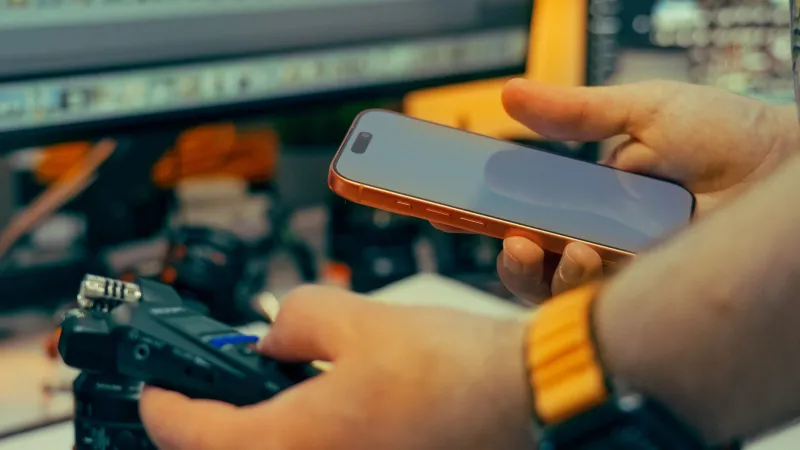
There's a specific kind of silence that happens in a group chat when things get real. Someone types out a paragraph, deletes it. Types it again. Adds a period, removes the period. Eventually, the message either gets sent as a watered-down version of the truth, or it never gets sent at all.
But lately, something else happens in that moment. A little waveform appears in the thread. Then another. And suddenly, instead of a carefully edited text, you're listening to forty-five seconds of your best friend's actual voice — cracking, laughing, trailing off mid-sentence — explaining the thing they couldn't figure out how to type.
Welcome to the voice memo era. Typing didn't die exactly, but for a generation raised on screens, talking is officially back.
The Typo Tax Was Too High
Texting has always demanded a strange kind of performance. You're not just communicating — you're formatting. Choosing between the casual lowercase flex and the suspicious full-sentence energy. Deciding whether an exclamation point reads as enthusiasm or a cry for help. Rewriting "that's so crazy" four times because it sounded sarcastic, then dismissive, then weirdly formal.
Voice memos blew all of that up. There's no tone to misread because the tone is right there, in the crack of a laugh or the pause before the punchline. Sarcasm survives. Irony translates. You can hear when someone's actually fine versus when they're saying they're fine.
For a generation that grew up being told their texts were receipts — screenshot them wrong and they end up on someone's Story — the voice memo is a small act of rebellion. It's ephemeral in spirit even when it's technically saved. It's a message that sounds like a person, not a press release.
Intimacy You Can Hear
There's real psychology underneath the trend. Hearing someone's voice activates a sense of closeness that text simply can't fake. A typed "lol" is a claim. A voice memo where your friend genuinely cackles at their own joke? That's evidence.
Researchers have actually studied this. People consistently overestimate how awkward voice messages will be to send and underestimate how much joy they bring to the person receiving them. In other words, the thing keeping most of us from hitting record — the fear of being cringe — is exactly the thing that makes the other person feel closer to us.
That's the quiet genius of the format. It requires something typing never did: your actual presence. Your cadence, your accent, the way you say your hometown's name, the specific pitch your voice hits when you're excited about something dumb. These are the details that make a friendship feel like a friendship, and for years, the group chat flattened all of them into the same font.
The Unwritten Rules Are Real
Of course, every new mode of communication eventually develops a constitution, and voice memos are no exception. The etiquette is still forming, but the big clauses are already pretty clear.
Never send a voice note longer than two minutes without warning. A nine-minute monologue at 8 a.m. on a Tuesday is a hostage situation.
Match the energy. If your friend sent you a breathless, unhinged 40-second recap of their situationship, responding with "k" is a declaration of war.
Ask before you send one at work hours. Some people can't exactly press play on a voice note titled "omg you will NOT believe this" while sitting in a meeting.
And the golden rule: listen all the way through before responding. Nothing says "I don't value you" like replying to something they answered in the second half of the memo.
There's also the matter of the transcript. Most phones now auto-transcribe voice messages, which is either a beautiful accessibility win or a chaotic mess depending on how unhinged your friends are. Either way, it's changed the game — you can skim when you can't listen, which quietly solves the format's biggest complaint.
Why Voices Hit Different Right Now
Zoom out a little and the trend makes even more sense. This is a generation that grew up with text as the default and voice as the exception. Calling someone without texting first is, famously, a violation. But a voice memo threads the needle — it's asynchronous like a text but human like a call. You get the warmth of speech without the obligation of real-time conversation.
It also fits the broader mood. After years of curating feeds and polishing personas, there's a real hunger for stuff that feels unpolished. Voice memos can't really be aestheticized. They're messy by nature. They capture the 3 a.m. energy — the big feelings, the half-formed theories, the inside jokes that make no sense to anyone else — in a way a typed message never could.
There's something almost poetic about it. The same generation that killed the phone call figured out a way to bring voices back into their pockets, on their own terms. Not a call you have to answer. A voice you can keep.
Press Play
So the next time you're staring at the text field, drafting and redrafting a message that keeps losing its soul, try this: hold down the button. Say the thing. Let your voice do what it was always going to do better than your thumbs.
Your friends don't want the paragraph. They want to hear you laugh at your own joke before you even finish telling it.
Long live the waveform.