The Two-Week Trend Trap: A Smarter Way to Shop When Fashion Moves at the Speed of Your FYP
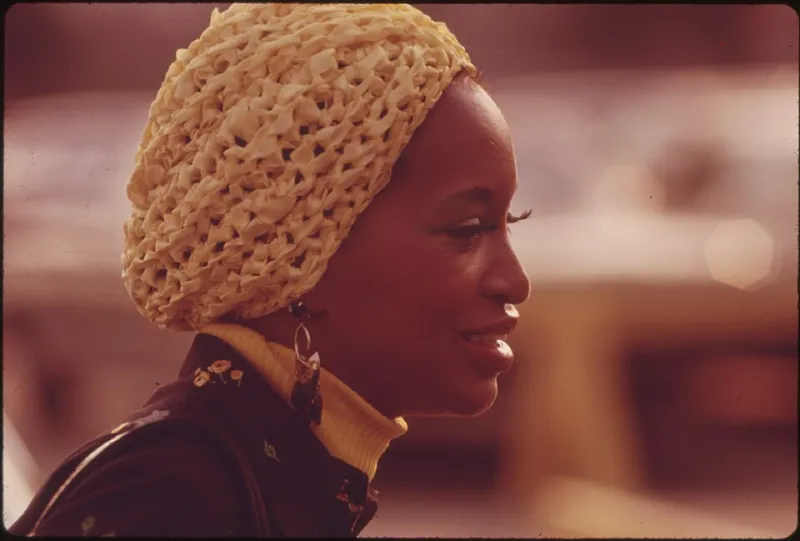
Photo: John H. White, Public domain, via Wikimedia Commons
Remember the Barbiecore moment? The quiet luxury era? The mob wife aesthetic? If you blinked, you might have missed the window to participate — or more likely, you bought something for it and now it's sitting in the back of your closet, tags still on, vibes fully expired.
Welcome to the micro-trend cycle, where fashion moves faster than your shipping confirmation email, and the aesthetic you bought into last month already feels embarrassingly dated. It's exhausting. It's expensive. And it's by design.
How We Got Here
Traditional fashion used to operate on two main seasons: spring/summer and fall/winter. Then fast fashion brands like Zara and H&M compressed that into monthly drops. Then came ultra-fast fashion — Shein, Temu, and their competitors — running on what analysts now call a "test and react" model that can go from trend spotted to product listed in under a week.
Layer TikTok's algorithm on top of all that, and you've got a machine that identifies, amplifies, and exhausts a visual trend in the time it used to take a designer to sketch a mood board.
"The cycle used to be six months minimum," says Danielle, 25, a vintage reseller based in Portland. "Now I'll see something blow up on a Wednesday and by the following Monday, Shein already has fifteen versions of it. It's wild."
For shoppers, this creates a very specific kind of anxiety: the fear of missing the window. If you don't buy the coquette-coded ballet flat right now, you'll be wearing it ironically by the time it arrives at your door.
The Psychology of Viral Shopping
Here's what the algorithm doesn't want you to know: the urgency you feel when scrolling through a viral fashion moment is not organic. It's manufactured.
Social platforms are optimized for engagement, and nothing drives engagement quite like the feeling that everyone is doing something and you're not. Fashion content is particularly effective at triggering what psychologists call FOMO-driven purchasing — a low-grade panic that if you don't act now, you'll be left behind.
The problem is that "left behind" in micro-trend culture means approximately two weeks. The trend you're panicking about right now will be replaced by a new one almost immediately, and the cycle resets.
"I kept buying things because I thought I was building a wardrobe, but I was actually just chasing a feeling," says Aaliyah, 22, a fashion student in New York. "None of it was actually me. It was just whatever was on my FYP that week."
This is the trap. And getting out of it requires a different kind of shopping literacy.
How to Tell the Difference Between a Real Trend and Viral Noise
Not all micro-trends are created equal. Some are genuinely short-lived — a specific color combination, a novelty print, a very particular silhouette that only works for one season. Others are early signals of something with more staying power.
Here's a framework that actually works:
The 30-Day Rule. If you're still thinking about a specific piece a month after you first saw it, that's meaningful. Impulse-driven micro-trend purchases tend to fade from your mind almost as quickly as the trend itself. Real desire has staying power.
The Costume Test. Ask yourself: does this piece work with at least three things I already own, or does it only work as part of a specific aesthetic moment? If you'd need to build an entirely new outfit around it, that's a red flag.
The Resale Check. Before buying anything trend-driven, look it up on Depop, Poshmark, or ThredUp. If there are already hundreds of listings for it at a fraction of retail price, that's a market signal — people who bought in are already trying to get out.
The "Who Made This" Question. Micro-trend culture runs on ultra-fast fashion, which runs on exploitative labor. If a piece is suspiciously cheap and arrived at your door in three days from overseas, there's a human cost to that price tag worth considering.
What Retailers Are Actually Doing About This
Major retailers are in a tough spot. On one hand, they need to move fast enough to capture trend-driven traffic. On the other, they're watching Gen Z increasingly talk about sustainability, overconsumption, and the environmental cost of disposable fashion.
Some brands are experimenting with smaller, more intentional drops — releasing limited quantities of trend-adjacent pieces rather than flooding the market. Others are investing in made-to-order models that reduce waste but require longer lead times. A handful of legacy retailers, including some department store staples, are quietly pulling back on their fastest-moving inventory in favor of "investment pieces" that can be marketed as long-term purchases.
None of this is purely altruistic — it's a response to shifting consumer sentiment among a demographic that increasingly calls out greenwashing and performative sustainability. But the pressure from Gen Z shoppers is real, and it's moving the needle.
Building a Wardrobe That Doesn't Expire
The antidote to micro-trend fatigue isn't ignoring trends entirely — it's learning to engage with them on your own terms.
Start with a strong base of pieces you'd wear regardless of what's cycling through your algorithm. Basics, well-made denim, a few quality outerwear options — these are your foundation. From there, you can play with trends in lower-stakes ways: accessories, a single statement piece, thrifted versions of the look that don't require a full financial commitment.
Thrifting and vintage shopping are particularly well-suited to micro-trend culture because they let you participate without feeding the production cycle. If something falls out of style in three weeks, you haven't lost much — and you might even be able to resell it.
"I started treating trends like borrowing something from a friend," says Marcus, 26, a stylist based in Chicago. "You try it on, you see if it fits your life, and then you pass it along. You don't have to marry it."
The Bigger Picture
Micro-trends aren't going away. The platforms that power them have no incentive to slow down, and the brands that profit from them are moving faster, not slower. But that doesn't mean you have to keep running on their timeline.
The smartest thing Gen Z can do right now is get comfortable with being a beat behind the trend cycle — or opting out of it entirely for certain moments. Because the most interesting personal style has never really been about what's trending. It's about knowing yourself well enough to make choices that hold up past the next FYP refresh.
Your wardrobe doesn't need to be a mood board for the algorithm. It can just be yours.